
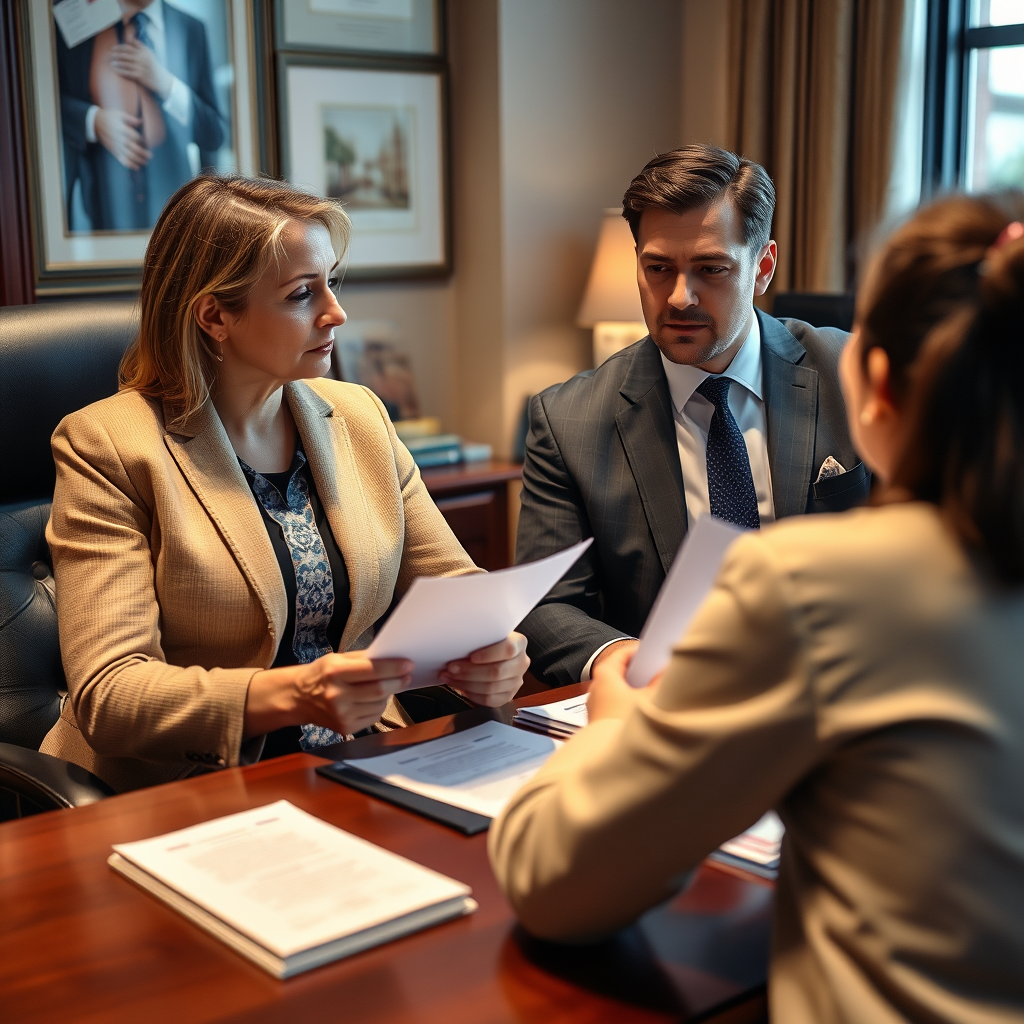
Arlington VA Lawyer for Nonconsensual Distribution of Private Sexual Images: Your Defense Starts Here
If you find yourself facing allegations regarding the nonconsensual distribution of private sexual images, it’s crucial to secure a skilled legal representative who understands the complexities of such cases. A Brunswick VA sexual image lawyer can provide the Experienced professionalise needed to Handling the legal landscape and protect your rights. With the implications of these charges being severe, having a dedicated defense team is essential to achieving the best possible outcome.
As of December 2025, the following information applies. In Virginia, nonconsensual distribution of private sexual images involves sharing intimate photos or videos without consent, leading to serious legal consequences. These charges can include significant penalties, such as jail time and fines. The Law Offices Of SRIS, P.C. provides dedicated legal defense for these matters, helping individuals understand their rights and build a strong defense.
Confirmed by Law Offices Of SRIS, P.C.
What is Nonconsensual Distribution of Private Sexual Images in Virginia?
In Virginia, the nonconsensual distribution of private sexual images is a serious offense, often referred to as “revenge porn.” It means sharing intimate photos or videos of someone without their explicit permission, especially when those images were taken or shared in a context where a reasonable expectation of privacy existed. It’s not about public nudity; it’s about the violation of trust and privacy when someone shares sexually explicit content, or content depicting nudity, that was meant to be private. This can include images taken during a private relationship that are later distributed maliciously after a breakup, or even images obtained through hacking or other illicit means. The law aims to protect individuals from the profound emotional, psychological, and reputational harm that such a violation can inflict.
To be clear, we’re talking about situations where someone posts, emails, texts, or otherwise transmits private sexual images of another person without that person’s consent. This is a criminal act under Virginia law, carrying significant penalties. It doesn’t matter if the person who shared the image originally received it with consent; if they distribute it further without the subject’s explicit permission, they could face charges. The key element here is the lack of consent at the point of distribution, turning what might have been a private moment into a public nightmare for the victim.
The severity of these charges reflects society’s growing recognition of the deep personal damage caused by such acts. It’s not just a minor indiscretion; it’s a violation that can shatter lives. If you or someone you know is facing accusations related to the nonconsensual distribution of private sexual images in Arlington VA, understanding the specifics of Virginia law is the first, vital step towards defending yourself.
Blunt Truth: Ignorance of the law is never a defense. If you’re involved, you need to understand what you’re up against.
Takeaway Summary: Nonconsensual distribution of private sexual images in Virginia is a serious criminal offense involving the sharing of private, intimate content without consent, carrying significant legal repercussions. (Confirmed by Law Offices Of SRIS, P.C.)
How to Defend Against Nonconsensual Sharing of Sexual Images Charges in Arlington VA
Being accused of nonconsensual distribution of private sexual images in Arlington VA can feel overwhelming, like your world is caving in. The emotional toll alone can be crushing, let alone the potential legal ramifications. But it’s important to remember that an accusation isn’t a conviction. You have rights, and there are defense strategies available. Taking the right steps early on can significantly impact the outcome of your case. Here’s a look at how a knowledgeable legal defense can approach these serious charges:
-
Don’t Panic, Get Legal Help Immediately
Your first instinct might be to panic or try to explain yourself to law enforcement. Stop. The most important action you can take is to secure experienced legal counsel as soon as possible. Anything you say can and will be used against you. An attorney can step in, protect your rights, and ensure you don’t inadvertently incriminate yourself. Think of it like this: if your house is on fire, you call the fire department, not try to put it out with a teacup. This is your legal house on fire; call a lawyer. A seasoned Arlington VA sexual image distribution lawyer can start building your defense from day one, providing a confidential case review to understand the nuances of your situation.
This isn’t about guilt or innocence at this stage; it’s about protecting your future. Having a lawyer means you have someone who understands the system and can speak on your behalf, preventing missteps that could harm your case. They can advise you on what to say and, more importantly, what not to say to investigators or prosecutors. The legal process is complex, and without professional guidance, you’re at a significant disadvantage. Don’t go it alone.
-
Understand the Specific Charges Against You
Before any defense strategy can be developed, you need to fully understand the exact charges you’re facing under Virginia law. The prosecution must prove several key elements beyond a reasonable doubt. These typically include that the image was private, that it depicted nudity or sexually explicit content, that it was distributed, and critically, that it was done without the subject’s consent. Your attorney will meticulously examine the complaint, police reports, and any evidence presented by the prosecution. They’ll look for weaknesses in the prosecution’s case, such as whether consent was truly absent, if the image truly met the legal definition of ‘private sexual image,’ or if there are issues with how the evidence was collected.
Sometimes, what appears to be a clear-cut case isn’t so simple. There might be questions about the privacy settings of an image, or whether a prior consent for viewing was misinterpreted as consent for distribution. It’s about dissecting every detail and challenging every assertion made by the state. An attorney will explain what the prosecution needs to prove and how each element might be challenged or defended against. This clarity is vital for developing an effective defense plan.
-
Preserve and Examine All Relevant Evidence
In cases involving digital evidence, preservation is key. Your legal team will work to secure all electronic communications, metadata, devices, and anything else that might be relevant to your defense. This includes reviewing your phone, computer, social media accounts, and any other digital platforms that might hold clues. Sometimes, the evidence can show that consent was indeed given, or that someone else was responsible for the distribution. Digital forensics can be a powerful tool, either supporting the prosecution’s claims or providing crucial exculpatory evidence for your defense.
For instance, timestamps, IP addresses, and communication logs can sometimes reveal that you weren’t the one who distributed the image, or that the image was already publicly available. It’s also important to check for any altered images or deepfakes, which can sometimes be mistaken for real content. Your attorney will coordinate with forensic Experienced professionals if needed to analyze digital footprints, ensuring no stone is left unturned. This meticulous approach to evidence can often uncover details that strengthen your defense.
-
Identify and Build Strong Defense Arguments
Once the evidence is gathered, your attorney will help identify the most effective defense strategies. Common defenses in nonconsensual sharing cases include lack of actual distribution, meaning the image was never truly shared with others; consent, arguing that the person pictured did indeed agree to the distribution; mistaken identity, where someone else was actually responsible; or challenging the image’s “private” or “sexual” nature under the law. There might also be arguments about whether the image was obtained legally or if the alleged victim had a reasonable expectation of privacy.
Another angle could be challenging the intent. Did you genuinely intend to cause harm, or was it an accidental share? While intent isn’t always a primary element of the crime, it can play a role in sentencing. Your attorney will explore every possible avenue, from procedural errors made by law enforcement to constitutional violations of your rights. Crafting a robust defense means carefully weighing all these factors and presenting the strongest possible case on your behalf.
-
Negotiate with Prosecutors
In many criminal cases, negotiations with the prosecution are a significant part of the process. Your attorney, representing your best interests, will engage with the Commonwealth’s Attorney to discuss potential plea agreements. This could involve reducing the charge to a lesser offense, or agreeing to certain conditions like counseling or community service in exchange for a more favorable outcome. A strong defense, built on thorough investigation and a solid understanding of the law, gives your attorney leverage in these negotiations.
A prosecutor is more likely to consider a fair agreement if they know they face a challenging trial. While a plea deal might not always be the goal, it can sometimes be the most pragmatic path, especially if it helps you avoid the most severe penalties like lengthy incarceration or registration as a sex offender. Your attorney will advise you on the pros and cons of any offer, ensuring you make an informed decision that aligns with your goals.
-
Prepare for Trial, If Necessary
If negotiations don’t yield a satisfactory outcome, preparing for trial becomes the next step. This involves meticulous preparation: interviewing witnesses, preparing cross-examination questions, selecting a jury, and crafting compelling opening and closing statements. Going to trial means presenting your defense before a judge or jury, who will ultimately decide your fate. It’s a high-stakes environment where experience and strategic thinking make all the difference.
Your attorney will work tirelessly to ensure every piece of evidence is properly presented, every argument is clearly articulated, and your side of the story is heard. They will anticipate the prosecution’s moves and be ready to counter them effectively. A trial is not just about presenting facts; it’s about telling a coherent story that resonates with the trier of fact. Having an attorney who is seasoned in the courtroom and comfortable under pressure is invaluable.
-
Address Potential Post-Conviction Considerations
Even after a conviction, the legal process isn’t necessarily over. Depending on the outcome, there might be options for appeals, or in the long term, possibilities for record sealing or expungement, if eligible. A conviction for nonconsensual distribution of private sexual images can have lasting consequences, impacting employment, housing, and social standing. Your attorney can advise you on the post-conviction landscape, helping you understand the collateral effects and any avenues available to mitigate them.
This long-term perspective is part of a comprehensive legal defense. It’s not just about the immediate court case but about your life moving forward. While the immediate focus is on avoiding conviction, thinking ahead about the potential for appeals or future record relief is also a part of a thorough legal strategy. An attorney can help you understand all your options, both immediate and long-term.
Can I Avoid Jail Time for Nonconsensual Distribution of Private Sexual Images in Virginia?
Facing charges for nonconsensual distribution of private sexual images in Virginia can be terrifying because the potential penalties are severe, including significant jail time. It’s a felony offense in Virginia, meaning a conviction can lead to years in state prison, substantial fines, and potentially even registration as a sex offender. The exact sentence depends on various factors, such as the number of images distributed, the number of victims, whether the victim was a minor, and your criminal history. The fear of incarceration is very real, and it’s a valid concern for anyone accused of this crime.
However, avoiding jail time is often a primary goal of the defense, and it’s not an impossible one. A knowledgeable Arlington VA sexual image distribution lawyer will meticulously investigate your case to identify every possible defense strategy that could lead to a dismissal, an acquittal, or a reduced charge. This might involve challenging the elements the prosecution must prove, such as demonstrating that consent was present, that the images weren’t truly ‘private sexual images’ under the law, or that there’s a mistaken identity.
Beyond outright challenging the charges, there are avenues for mitigation. Your attorney can present mitigating factors to the court, such as your lack of prior criminal record, your remorse, efforts at rehabilitation, or any other circumstances that might persuade a judge or jury towards leniency. Sometimes, diversion programs or alternative sentencing options can be explored, especially for first-time offenders, which could involve counseling or community service in lieu of jail. While the stakes are high, a strategic and aggressive defense aims to protect your freedom and future, working tirelessly to achieve the best possible outcome.
Real-Talk Aside: The legal system isn’t always fair, but a good lawyer can make sure your story gets heard, and your rights are defended.
Why Choose Law Offices Of SRIS, P.C. as Your Arlington VA Sexual Image Distribution Attorney?
When your reputation, freedom, and future are on the line due to charges of nonconsensual distribution of private sexual images in Arlington VA, you need more than just a lawyer; you need a staunch advocate who understands the personal and legal stakes. The Law Offices Of SRIS, P.C. stands ready to provide that dedicated defense.
Mr. Sris, the firm’s founder and principal attorney, brings decades of experience to the table. His approach is rooted in a deep understanding of criminal defense and a commitment to protecting the rights of those accused. His insight guides our practice:
“My focus since founding the firm in 1997 has always been directed towards personally handling the most challenging and complex criminal and family law matters our clients face.”
This isn’t just a statement; it’s a philosophy that defines our firm. We understand that cases involving private sexual images are intensely personal and often come with a heavy emotional burden. We approach each case with empathy, direct communication, and a reassuring presence, ensuring you’re never left in the dark.
Our team at Law Offices Of SRIS, P.C. is seasoned in Virginia criminal law, and we’re dedicated to meticulously examining every detail of your case. We work to uncover every possible defense, challenge every piece of evidence, and fight tirelessly to protect your rights and achieve the most favorable outcome. We know the courts, we know the law, and we know how to build a strong defense.
Choosing the right attorney is one of the most significant decisions you’ll make during this challenging time. We offer a confidential case review to discuss your situation, explain your options, and outline a clear path forward. We believe in empowering our clients with knowledge and providing a vigorous defense.
Law Offices Of SRIS, P.C. has a location in Arlington. Our address is 1655 Fort Myer Dr, Suite 700, Room No: 719, Arlington, VA, 22209, US. You can reach us directly at +1-703-589-9250. We are here to help you through this difficult period with strength and compassion.
Call now for a confidential case review.
Frequently Asked Questions About Nonconsensual Sharing of Private Sexual Images in Virginia
1. What exactly constitutes a “private sexual image” under Virginia law?
Under Virginia law, a “private sexual image” typically refers to any visual depiction, photograph, or video of a person’s intimate body parts or of that person engaging in sexual acts, where there’s a reasonable expectation of privacy and it was not intended for public distribution.
2. Is it a crime if I only showed the image to one person?
Yes, distributing a private sexual image to even a single person without consent can constitute a crime under Virginia law. The law doesn’t specify a minimum number of recipients for the act to be considered illegal distribution.
3. What if the image was initially shared with my consent, but I later withdrew it?
If consent to distribute was later withdrawn, continued distribution can still lead to charges. Consent for initial sharing does not equate to perpetual consent for further distribution. A lawyer can examine the specifics of consent in your case.
4. Can I be charged if I didn’t create the image, but only shared it?
Absolutely. The act of “distribution” itself is the criminal offense. You do not need to be the creator of the private sexual image to face charges for unlawfully sharing it without the subject’s consent.
5. What are the penalties for a first offense in Virginia?
A first offense in Virginia for nonconsensual distribution of private sexual images is a Class 1 misdemeanor, punishable by up to 12 months in jail, a fine of up to $2,500, or both. Subsequent offenses carry harsher penalties.
6. Does this charge require registration as a sex offender?
Conviction for nonconsensual distribution of private sexual images does not automatically require sex offender registration in Virginia unless other specific aggravating factors are present. However, the court can impose it under certain circumstances.
7. What if I was under the age of 18 when the incident occurred?
If you were under 18 at the time of the incident, your case would typically be handled in the juvenile court system, which has different procedures and potential outcomes than adult criminal court. Legal guidance is still vital.
8. How quickly do I need to get a lawyer after being accused?
It is important to secure legal representation immediately after being accused or becoming aware of an investigation. Early intervention by an attorney can significantly impact the strategy and potential outcome of your case.
9. What’s the difference between “distribution” and “possession”?
“Distribution” means to share or disseminate the image to others, while “possession” means merely having the image on your device. Only distribution without consent is criminalized by this specific Virginia statute.
10. Can civil action be taken against me in addition to criminal charges?
Yes, victims of nonconsensual distribution of private sexual images can pursue civil lawsuits for damages, such as emotional distress or reputational harm, in addition to any criminal charges filed by the state.
The Law Offices Of SRIS, P.C. has locations in Virginia in Fairfax, Loudoun, Arlington, Shenandoah and Richmond. In Maryland, our location is in Rockville. In New York, we have a location in Buffalo. In New Jersey, we have a location in Tinton Falls.
Past results do not predict future outcomes.
Arlington County is one of the localities covered in our wider Virginia discussion of nonconsensual distribution of private sexual images.