
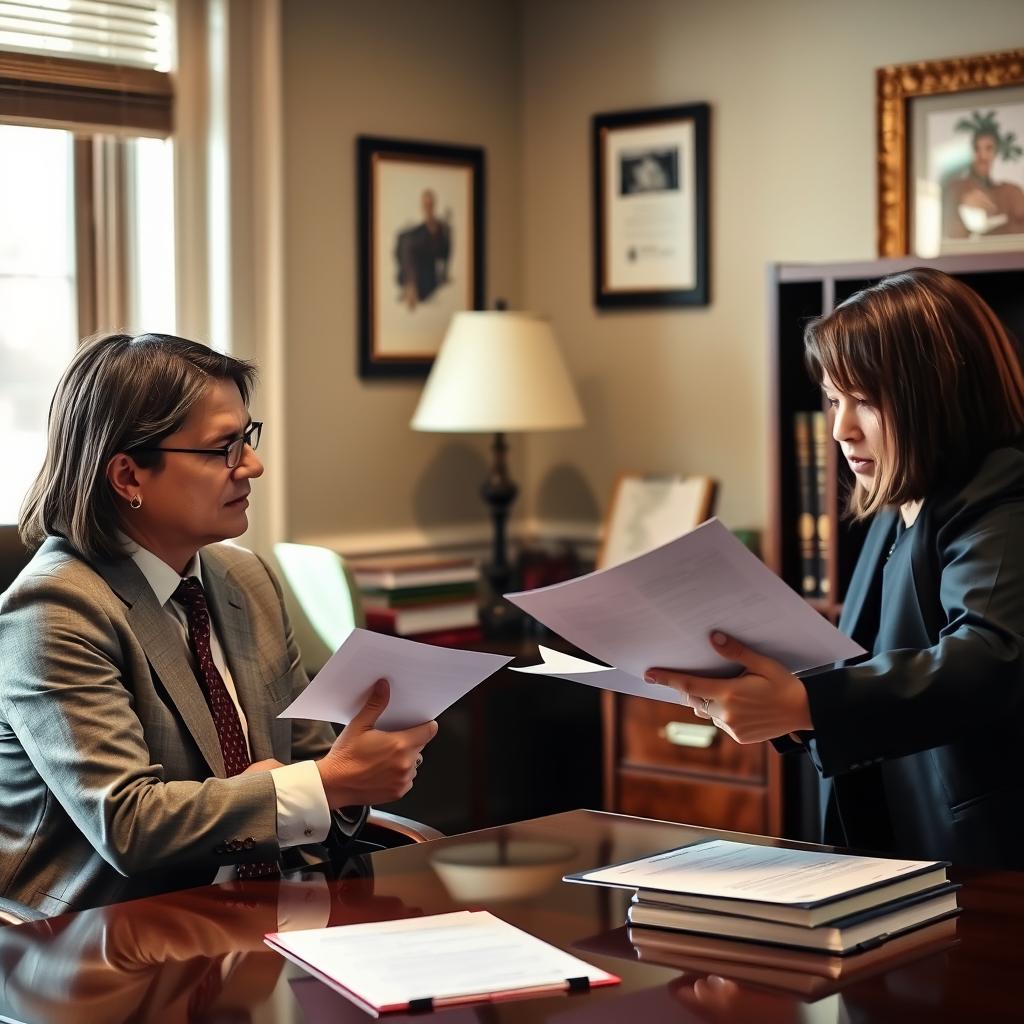
Solicitation lawyer Allegany County, NY
You were on a dating app, or maybe a conversation in a bar took an unexpected turn. An undercover operation flagged your messages, and now you are staring at a criminal solicitation charge in Allegany County, New York. The shock is real—and so are the potential consequences. Accusations of solicitation, whether they involve an offer to engage in prostitution or an alleged request for a sexual act, can upend your life. A conviction may lead to incarceration, fines, and long-term damage to your reputation and career. In some circumstances, it can also trigger sex‑offender registration obligations. The Allegany County Court in Belmont handles these matters, and the local Assistant District Attorney’s office prosecutes them actively. You need a defense that understands not only New York criminal procedure but also how sex‑crime allegations are investigated and charged in this region. At Law Offices Of SRIS, P.C., Mr. Sris and the firm’s Of Counsel bring extensive combined legal experience to cases like yours. To request a consultation, reach our firm at (888) 437-7747. Law Offices Of SRIS, P.C. – Advocacy Without Borders.
Defending Against Solicitation Charges in Allegany County
A charge of criminal solicitation in New York can be deceptively simple on paper but deeply complex in practice. The prosecution must prove beyond a reasonable doubt that you, with the intent that another person engage in specific conduct, solicited, requested, commanded, importuned, or otherwise attempted to cause that person to engage in that conduct. In the context of sex‑related allegations, the underlying conduct typically involves an alleged sexual act, exposure, or an exchange of value. The investigation often relies on electronic communications, witness statements, or undercover operatives. Mr. Sris and the firm’s Of Counsel scrutinize every element. Was there really a clear request, or were the words ambiguous? Was identity an issue? Was the alleged “victim” an adult undercover officer rather than a real potential partner? Did law enforcement follow constitutionally sound procedures? In Allegany County, cases are prosecuted by the District Attorney’s office in Belmont before a familiar corps of judges. Knowing how the local court evaluates these sensitive matters allows the firm to craft a tailored defense strategy that challenges the state’s evidence, exposes weaknesses, and pursues the trusted achievable resolution—whether dismissal, reduction to a non‑criminal violation, or a favorable plea when trial is not advisable.
What to Expect When a Solicitation Case Moves Through the Court System
After an arrest or issuance of a criminal summons, the first appearance is typically an arraignment in Allegany County Court or, for lesser offenses, in a local town or village court. At arraignment, the charges are formally read, and bail or release conditions are set. Because solicitation charges can carry the stigma of a sex offense, conditions may include stay‑away orders or electronic monitoring. The next phases involve discovery, where the prosecution turns over police reports, digital evidence, and any recordings. Motions may challenge the sufficiency of the evidence, the legality of the arrest, or admissibility of statements. Mr. Sris and the firm’s Of Counsel handle this process while keeping you informed at every step. Many solicitation cases resolve through negotiation; New York law permits plea‑bargaining, and the firm works to secure reduced charges or alternative dispositions. If the case proceeds to trial, the prosecution must prove each element beyond a reasonable doubt. The timeline varies depending on docket congestion, motion practice, and the complexity of the evidence. Throughout the process, the firm provides clear, honest guidance so you can make informed decisions about your defense.
Potential Penalties for Solicitation Offenses
New York penal law classifies solicitation charges at different levels, from a violation to a felony, depending on the alleged underlying crime and the alleged victim’s age. A misdemeanor conviction can result in up to a year in jail, probation, fines, and a criminal record. When the charge involves an alleged solicitation of a minor or a serious sex offense, it can be a felony with significant state‑prison exposure. Beyond incarceration, a conviction can carry collateral consequences: mandatory sex‑offender registration under the Sex Offender Registration Act, restrictions on where you can live and work, and damage to professional licenses. Even if registration is not mandated, the public record of a sex‑related solicitation charge can affect employment background checks and personal relationships. Because the stakes are so high, it is critical to challenge the prosecution’s case from the outset. An experienced attorney can identify defenses—for example, factual impossibility, lack of intent, mistaken identity, or entrapment—that may lead to dismissal or a substantial reduction of the charges. Mr. Sris and the firm’s Of Counsel evaluate every angle to protect your future. Results may vary.
About Mr. Sris and the Firm’s Of Counsel Team
Mr. Sris, Owner and Founder of Law Offices Of SRIS, P.C., has practiced law since 1997 and is admitted in Virginia, Maryland, the District of Columbia, New Jersey, and New York. A former prosecutor, he understands how the state builds its case and uses that insight to anticipate prosecutorial strategy. He has testified before the Virginia House Courts of Justice Committee in support of 2019 HB 635 (chief patron Del. David Bulova). Mr. Sris and the firm’s Of Counsel bring extensive combined legal experience to every matter. Results may vary. The team appears regularly in Allegany County Court and the New York Supreme Court Criminal Term, offering the local knowledge and multi‑state perspective that a high‑stakes criminal charge demands. To request a consultation, contact Law Offices Of SRIS, P.C. at (888) 437-7747.
Frequently Asked Questions
What is considered criminal solicitation in New York?
Criminal solicitation occurs when a person, with intent that another person engage in conduct constituting a crime, requests or encourages that person to engage in such conduct. The charge is distinct from attempt or conspiracy; it focuses on the act of requesting or commanding a criminal act. In sex‑related contexts, solicitation may involve an offer to engage in prostitution, a request for a sexual act from a minor, or any communication that the state interprets as an attempt to promote a sexual offense. The specific offense level depends on the underlying felony or misdemeanor that was allegedly solicited. Because the definition can be broad, a strong defense often challenges whether the communication truly constituted a clear request for illegal conduct, or whether it was merely ambiguous banter.
Do I need a lawyer for a solicitation charge in Allegany County?
Yes, retaining experienced counsel as soon as possible after an arrest or accusation is strongly advisable. Even a misdemeanor solicitation conviction can create a criminal record that follows you for life, and certain solicitation charges carry sex‑offender registration consequences. A lawyer can evaluate the evidence before you make any statements, negotiate for pre‑arraignment diversion or a reduction, and protect your rights at every hearing. In Allegany County, the District Attorney’s office prosecutes these cases seriously, and self‑representation rarely yields a result as favorable as having a knowledgeable attorney who understands the local court and the nuances of New York penal law. To discuss your situation, contact Law Offices Of SRIS, P.C. at (888) 437-7747.
How does an attorney challenge a solicitation accusation?
A defense attorney examines the accusation for legal inadequacy, factual impossibility, entrapment, identity mistakes, and constitutional violations. For example, if the communications were with an undercover officer, the defense may argue that the defendant never intended to carry out an actual criminal act—relying on the legal doctrine of impossibility. If the alleged target was not a real minor but an adult pretending to be one, the defense may challenge the charge’s factual basis. In cases involving online chats, the defense may question whether the messages are attributable to the defendant. Each defense is tailored to the specific evidence and the applicable New York statutory framework. Mr. Sris and the firm’s Of Counsel diligently pursue every viable legal and factual avenue to weaken the prosecution’s case.
What should I do if I am arrested for solicitation in Allegany County?
Invoke your right to remain silent and ask to speak with an attorney. Do not discuss the facts with police, even if they suggest that cooperation will help. Anything you say can be used against you. Contact Law Offices Of SRIS, P.C. at (888) 437-7747 as soon as possible so that we can intervene early—before you make statements or consent to searches that may complicate your defense. If you are taken before a judge for arraignment, having counsel present can affect bail, release conditions, and the pace of discovery. Prompt legal involvement is critical to building a strong defense from the start.
Will a solicitation conviction require sex offender registration?
Not every solicitation conviction results in sex‑offender registration; it depends on the specific charge and the underlying alleged conduct. New York’s Sex Offender Registration Act applies to certain enumerated offenses, including some sex crimes involving minors. If the solicitation charge relates to an alleged sexual act with a minor, registration may be mandatory upon conviction. For other solicitation offenses—such as soliciting prostitution from an adult—registration is generally not required, but a conviction may still carry significant penalties. An experienced attorney can evaluate the charges you face and advise you on the specific registration risks associated with your case. Because this is a highly fact‑specific area, obtaining personalized legal guidance is essential.
Can a solicitation charge be reduced or dismissed?
Yes, many solicitation charges are resolved through plea negotiations that reduce the offense to a non‑criminal violation, a disorderly conduct, or a lesser misdemeanor. Dismissal is possible when the evidence is insufficient or constitutional violations are present. In Allegany County, an attorney who knows the local court and the prosecutors’ tendencies can often negotiate for an adjournment in contemplation of dismissal or a diversion program, especially for first‑time offenders. The key is early and active motion practice and negotiation. Every case is different, and results depend on the specific facts, but our firm works toward the trusted achievable outcome.
How do Allegany County courts handle solicitation cases?
Allegany County criminal matters are heard in the County Court in Belmont or, for felonies, in the New York Supreme Court Criminal Term for Allegany County. The local judges and prosecutors are familiar with the nuances of sex‑related solicitation charges. The court process generally follows standard New York criminal procedure: arraignment, discovery, motion practice, possible plea conferences, and trial if necessary. The court may impose protective orders or electronic monitoring conditions during the pendency of the case. Because the community is relatively small, the stakes for the accused are high; privacy concerns and reputational impact are often magnified. Having a lawyer who appears regularly in Belmont helps Handling these local dynamics effectively.
What is entrapment and can it be a defense?
Entrapment occurs when law enforcement induces a person to commit a crime that the person was not predisposed to commit; when proven, it can be a complete defense. In solicitation cases, if an undercover officer repeatedly pressured you or created a situation that made an otherwise law‑abiding person cross the line, entrapment may apply. The burden is on the defense to establish that the government’s conduct was outrageous and that you lacked predisposition to commit the offense. This defense is fact‑intensive and requires a careful review of all communications and interactions. Our firm examines every exchange for signs of overreaching by law enforcement and raises entrapment when the evidence supports it.
How long does a solicitation case typically take to resolve?
The duration of a solicitation case varies significantly depending on the charges, the complexity of the evidence, court scheduling, and whether the case resolves through negotiation or trial. A straightforward misdemeanor might be resolved within a few months if a plea agreement is reached early. Felony cases, or those involving contested motion practice and trial, can take a year or more. The Allegany County Court’s calendar and the availability of witnesses influence the timeline. While you cannot control all of these factors, having proactive legal counsel helps move the case forward efficiently and avoids unnecessary delay. We keep clients informed of the expected timeline as it develops.
Can I be charged with solicitation based on online communications alone?
Yes, New York law permits solicitation charges to be based entirely on electronic communications, such as text messages, emails, or chat logs. If the messages contain language that a prosecutor can argue constitutes a request for illegal sexual conduct, a charge may be filed even if no physical meeting occurred. Defenses may include challenging the authenticity of the messages, arguing that the language was ambiguous or joking, or raising identity issues if someone else used your account. Because digital evidence is central to many solicitation cases, our firm works with forensic Experienced professionals when necessary to analyze metadata, device logs, and the context of the communications.
What is the difference between solicitation, attempt, and conspiracy?
Solicitation focuses on the act of asking or encouraging another person to commit a crime; attempt occurs when a person takes a substantial step toward committing the crime; conspiracy involves an agreement between two or more people to commit a crime. In New York, these are separate criminal offenses, and each carries its own elements and penalties. The prosecution may charge one or more of them together. Understanding the distinction is important because the evidence required for each varies, and a defense that succeeds against one charge may not apply to the others. Our legal team analyzes the specific allegations and tailors the defense accordingly.
Request a Consultation
If you or a loved one is facing a solicitation accusation in Allegany County, New York, the decisions you make now can affect the rest of your life. Mr. Sris and the firm’s Of Counsel offer experienced, direct legal counsel focused on protecting your rights. To discuss your case in a confidential setting, reach Law Offices Of SRIS, P.C. at (888) 437-7747. Appointments are available at our New York location by appointment only. We serve clients throughout Allegany County, including Belmont, Wellsville, Alfred, and all surrounding communities.
Attorney advertising. Prior results do not guarantee a similar outcome.
Case results depend on a variety of factors unique to each case.
Results may vary.